JESSE PESTA
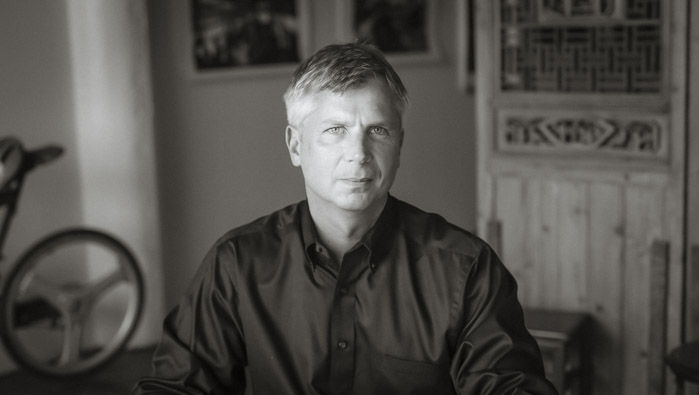
♦ Hi, I’m the deputy editor for climate and environment at The New York Times, a former Page One editor and foreign correspondent for The Wall Street Journal and a photographer. I hail from a place called Starve Hollow and I sincerely hope I’m friendlier than the photo makes me look.
♦ As a reporter I’ve written about the massacre of the royal family in Nepal, trains made out of bamboo in Cambodia and the September 11, 2001, terrorist attacks from Pakistan. At both the NYT and WSJ, projects I’ve edited have been finalists for the Pulitzer Prize.
♦ Nice words have been said by nice people from Boingboing (“You guys, this is quite a lede”), Human Rights Watch (“Shocking + important reporting”), the Annals of Improbable Research, the Museum of Modern Art and various others. My favorite is someone who described this piece as “A #magicrealism short story.”
♦ The links to many of these nice words disappeared with time. A reminder to us all to hang on to copies of the pleasant things people say about you.
♦ A silly story I wrote about traffic jams in the Himalayas was once passed around by the Dalai Lama, so I’ve got that going for me.
JOURNALISM
♦ As deputy editor on the Times’s climate desk I focus on visual, investigative and narrative projects. Our reporting on the Trump administration’s denial of science was a finalist for the Pulitzer Prize in Public Service. Visual projects have included:
An investigation using special cameras to expose “super emitters.” • A narrative of the history behind Chicago’s surprising vulnerability. • This visualization of a crisis in the Gulf Stream. • John Branch’s graceful look at the ancient living things we’re losing.
♦ Before climate I oversaw the NYT’s investigative business reporting. Projects there included “Bottom Line Nation,” “Addiction Inc.” and many long-form cover stories for Sunday Business, a section in the Sunday Times print editions that I also edited.
♦ Before joining the NYT I was a foreign correspondent for The Wall Street Journal. So here’s the piece about trains made out of bamboo. While on the Journal’s Page One investigative and features desk, I also edited many investigative and narrative projects including a multi-year report on privacy that was a Pulitzer finalist.
♦ As a reporter I’ve written about:
A candy shop that treats
burn victims. • A
nightmare on India’s Route 66. • A young mother
set on fire. • Violent
cow-rights activists. • Nepal’s terrible
earthquake (photo essay). • A
surreal drill team. • India’s
accidentally groovy wristwatches. • A
wicker basket for abandoning babies.
One-horsepower taxis. • The
child-goddesses of Kathmandu. •
Coin divers in a sacred river. • The
world’s fastest ocean liner (with
video). • An
anachronistic parade in the American midwest. • The bizarre rumor mill that flourished after Nepal’s king was killed by his son.
♦ As an editor over the years I’ve been lucky to work with brilliant reporters on:
This critical re-examination of Truman Capote’s masterwork “In Cold Blood.” • One woman’s first-person investigation into her ex-husband’s death (this became a book). • A man who got a criminal record because of a clogged toilet. • San Francisco’s housing anarchists (this became a book too). • Vietnam’s bride kidnappers. • FBI informants who snitch on their girlfriends.
CREATIVE PROJECTS
♦ Please visit Starve Hollow Road, which is named for the place where I grew up.
♦ There are also entertaining things to see on this unusual site, which is a collaboration with my sister, mom and dad where we’ve been publishing art, short stories, essays and other things for years. I’m also on Instagram.
♦ I’ve had photos published in The Wall Street Journal (for example here, here, here, here and here), Marie Claire, The Daily Beast, Newsweek and others. Photos have been exhibited at the Exit Art gallery, New York; Photographic Gallery, Front St., New York; Chrystie Street Gallery, Chrystie St., New York; ABC No Rio, Rivington St., New York; the Southern Indiana Center for the Arts; and the Edward Hopper House, Nyack, N.Y.
NEWS
♦ All your Jesse Pesta news, updated at least once every few years:
♦ April 1, 2026: My sister, mom and I are very excited to be relaunching an unusual family project we’ve been entertaining ourselves with for nearly a quarter-century. It’s called Fine Words Butter No Parsnips, a collection of fine art, short stories, essays, cartoons and other creative things. Please stop by!
We started this in 2004 (back then with dad too) and add new stuff when the mood strikes. We relaunched it to make the art bigger. Here’s the story behind the weird name.
♦ August 2024: I wrote a “Great Read” about Susan Gibbs and how she came to fall in love with, and ultimately control the fate of, the S.S. United States, a historic oceanliner (and secret weapon). She was facing the ship’s biggest crisis ever.
“So as Ms. Gibbs and the conservancy look for a pier, they must also think the unthinkable. Soon they might be forced to send their beloved ship to the bottom of the sea.”
♦ June 2023: I was the guest on Sree Sreenivasan’s podcast, NYT Readalong, to talk about climate coverage in the Times along with many other things. Here’s the episode.
♦ May 2020: Our year-long project examining the Trump administration’s denial of science was a finalist for the Pulitzer Prize in Public Service.
♦ January 2018: After more than two years editing business investigations and enterprise projects, and serving as editor of the Sunday Business section, I’m thrilled to be joining the NYT’s climate team as deputy editor. There’s no bigger story.
♦ December 2017: A narrative project I led, Addiction Inc., was published as a special 16-page, four-story section. It’s first time the Times has published a multi-part project as a standalone section.
♦ July 2016: A piece I wrote with Preetika Rana, “The Dangerous Meeting of Women and Fire,” won the the South Asian Journalists Association’s top prize for enterprise reporting.
We also received honorable mention for feature writing from the Society for Features Journalism ~ a particular honor considering that the project that beat us, won a Pulitzer.
♦ July 2016: The interactive project “Death on India’s Route 66” I wrote and reported with Krishna Pokharel and Preetika Rana was awarded the Clarion prize for feature writing.
♦ January 2016: Delighted to be an adviser again to master’s students at Columbia University’s graduate program for investigative journalism, the Stabile Center.
♦ Oct. 7, 2015: Here’s my first NYT byline, a news-breaking piece on the S.S. United States.
Update: Against all odds, the ship might actually sail again.
♦ Sept. 21, 2015: I’ve joined The New York Times as an enterprise and project editor.
♦ January 2015: Xeni Jardin at Boingboing kind of digs the lede on this piece about a surreal yet badass motorcycle stunt team.
♦ September 2014: The Dalai Lama, I learned, was handing out copies of this funny article I’d written about traffic jams in the Himalayan foothills. He wasn’t pleased.
There used to be a WSJ.com video of an Indian official saying at a press conference that the Dalai Lama had confronted him with my article. Alas, now gone! But I wouldn’t lie to you about the Dalai Lama.
♦ April-June 2014: “The Lobotomy Files” is honored by the National Press Club and receives the 2014 Ancil Payne Award for Ethics in Journalism. This is the second project I’ve edited to receive Ancil Payne honors: In 2010 (see below) Farnaz Fassihi’s outstanding reporting on Iran, “Hearts, Minds and Blood,” was recognized.
Describing “The Lobotomy Files,” the judges said: “We are particularly impressed with the ethical consciousness” behind the determination to do the story right, “for the man who was still alive.”
♦ February 2014: After six years as a Page One editor, I returned to reporting for the WSJ as a traveling writer focused on South Asia.
♦ Oct. 15, 2013: The International Consortium of Investigative Journalists honors the Journal’s reporting on tuberculosis with the Daniel Pearl prize, its highest award.
♦ April 16, 2012: “The End of Privacy,” The Wall Street Journal’s coverage of the erosion of privacy in the U.S., is named a finalist for the Pulitzer prize in explanatory reporting.
♦ June 3-Aug. 5, 2011: Selected photos on exhibit at the Exit Art gallery in New York as part of the gallery’s Contemporary Slavery exhibition.
♦ March 26, 2011: Represented The Wall Street Journal in a panel discussion at Yale Law School to discuss personal privacy and the online advertising business.
♦ Sept. 25, 2010: I spoke about Danny Pearl, my colleague and friend who was murdered in Pakistan after the 2001 terror attacks, at Music for Humanity, a concert commemorating Danny’s life.
Here’s a video of my remarks. The talking starts about a minute in.
♦ April/May, 2010: The WSJ’s Iran coverage, “Hearts, Minds and Blood,” wins two prizes for foreign correspondence, from the Society of Professional Journalists and the Overseas Press Club, as well as the Robert F. Kennedy award and the Payne Award for Ethics.
♦ April 8, 2010: Represented the Journal on a Nieman Foundation panel on fairness in writing at Harvard.
♦ Aug. 12, 1994: My first “A-hed,” about an unusual parade, hits the Journal’s front page.
MAKE CONTACT
Jesse @ JessePesta • com
Better yet, use this contact form.
Copyright © 2004-2026 Jesse Pesta
All rights reserved
The portrait at the top of the page is the work of the wonderful Jennifer MacFarlane